
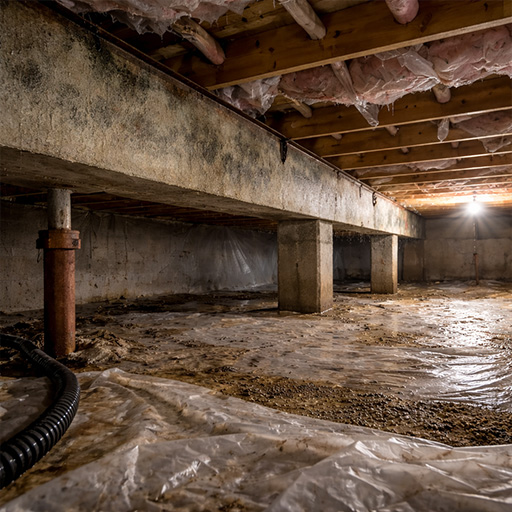
For many homeowners, the crawl space is out of sight and often out of mind. However, this neglected area can harbor a significant threat due to high humidity levels: mold growth. Understanding the conditions that lead to mold in your crawl space and how to address this issue is crucial for maintaining a healthy, safe home environment.
Why Crawl Spaces are Susceptible to Mold
Crawl spaces are especially prone to mold growth for several reasons:
- Poor ventilation: Many crawl spaces lack adequate air exchange, which contributes to stagnant, moist air.
- High humidity: Being close to the ground, crawl spaces often experience higher humidity levels, which can easily surpass the mold growth threshold.
- Condensation: Pipes and ducts that run through crawl spaces can sweat and drip, increasing moisture levels.
- Limited sunlight: The absence of sunlight in these areas prevents the natural evaporation of moisture.
When mold takes hold, it can spread quickly, eating away at wooden structures, including floor joists and beams, and pose health risks to those with allergies or respiratory issues.
Signs of Mold in Your Crawl Space
Being vigilant about mold can help you catch it before it becomes a larger issue. Here are some signs that your crawl space might be hosting unwanted fungal guests:
- Musty odors: A persistent, musty smell emanating from the floors or lower walls may indicate mold growth beneath.
- Visible mold: Any visible mold patches, however small, should be taken seriously.
- Increased allergy symptoms: If residents start experiencing unexplained allergies or respiratory problems, it might be due to mold spores from the crawl space.
- Excess moisture: Signs of water pooling or condensation in or around your crawl space are warning flags.
Combating Crawl Space Mold
Prevention and timely intervention are key in managing crawl space mold. Here are some strategies to keep your crawl space dry and mold-free:
- Enhance ventilation: Improving air circulation can significantly reduce moisture. Consider installing vents or a crawl space fan.
- Use a dehumidifier: A dehumidifier can help maintain humidity levels within a safe range (ideally below 60%).
- Insulate pipes: This prevents condensation by keeping surface temperatures on plumbing fixtures above the dew point.
- Vapor barrier installation: Laying a vapor barrier can reduce ground moisture evaporation into the crawl space.
- Regular inspections: Periodic checks by professionals can catch early signs of mold or sources of moisture before they escalate.
Addressing crawl space mold is not just about removing what you can see; it’s about creating an environment where mold can’t thrive. If you suspect your crawl space might be at risk or already has mold, taking immediate action is crucial.
Need a Mold Inspection or Removal? Call Us!
If you’re concerned about mold in your crawl space or anywhere else in your home, don’t wait. Contact us at 978-257-2345 for a comprehensive inspection and effective removal solutions. Protect your home and health from the hidden hazards of mold.