
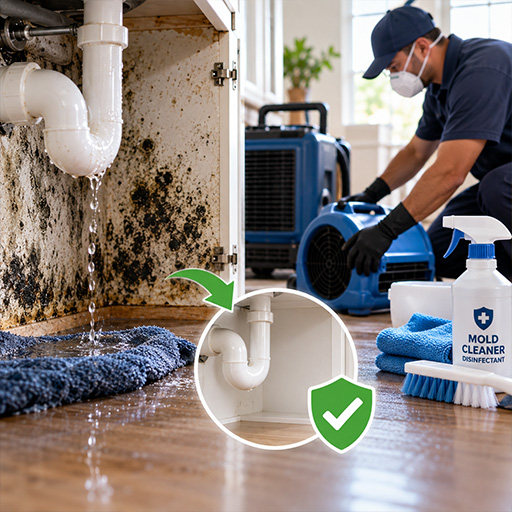
Experiencing a plumbing leak in your home can be quite distressing. Not only do you have to deal with the immediate water damage, but there’s also the lurking threat of mold growth, which can compound the problem significantly. Mold can start to develop within 24 to 48 hours following exposure to moisture, making swift and effective action critical. Here are some proactive steps you can take to prevent mold after a plumbing leak.
Immediate Steps to Take Following a Leak
When you discover a leak, the clock starts ticking. Here are the first actions you should take:
- Stop the Water: First, stop the source of the water if possible. This might mean shutting off the main water supply to your home.
- Remove Excess Water: Use towels, mops, and buckets to clean up as much water as you can. The quicker you remove the water, the lower the chances of mold forming.
- Document the Damage: Take photos and make notes about the damage. This can be helpful for insurance claims and for contractors who may need to repair the damage.
Drying Out the Affected Area
Drying out the affected area thoroughly is crucial in mold prevention. Here’s how you can achieve this:
- Use Fans and Dehumidifiers: Set up fans and dehumidifiers around the affected area to help dry out the moisture. Make sure the room is well-ventilated.
- Remove Wet Objects: Remove any carpets, furniture, or other items that are wet. Place them in an area where they can dry out completely, preferably outside or in a well-ventilated area.
- Check Hidden Areas: Moisture can accumulate in wall cavities, under floors, and in other less-visible areas. Sometimes, professional drying equipment is needed to target these spots.
Maintaining Vigilance
Once you have taken the immediate and drying out actions, keeping an eye on the situation is key. Stay vigilant for any signs of mold or residual moisture:
- Inspect Regularly: Check the affected areas regularly for any signs of mold growth or lingering dampness.
- Sniff Test: Be aware of any musty odors, which can be an indicator of mold presence.
- Professional Mold Inspection: If you suspect there’s mold growth or if the area was extensively water-damaged, consider hiring a professional mold inspection service to assess the situation.
Why Professional Mold Remediation is Important
While DIY methods can be effective for minor mold issues, significant water damage typically requires professional remediation. Professionals have the tools, knowledge, and expertise to ensure that mold is thoroughly removed and that your home remains a safe, healthy environment.
Need a Mold Inspection or Removal? Call Us!
If you’re worried about mold following a recent plumbing leak or if you’ve noticed signs of mold in your home, don’t hesitate to reach out for professional help. At our mold testing and removal company, we’re equipped to tackle these challenges swiftly and effectively. Call us today at 978-257-2345 to schedule an inspection or to get more information on our services. Protect your home and health; let us handle the mold!