Mold Preventing
Home Sale?
Mold Damage From Past Leak?
Mold Smell in Attic, Bathroom, or Basement
CALL US TODAY!
Home Owners
Realtors
Home inspectors
Your Affordable Mold Removal Focused Company
We Identify Mold, Remove, Disinfect, and Seal
We are an owner-operated, mold-removal focused company, that is designed to efficiently and affordably service your mold problem. How? We are NOT a franchised based water/ fire restoration company that focuses on expensive demolition and insurance-based jobs. We open less than 15% of our customers’ walls or flooring. MassMold’s client base is home owners who simply need to remove mold from their homes at a reasonable price.
Not all mold is dangerous! Don’t let other mold testing companies scare you. More scenarios require mold remediation services than simply water-damage events. Other situations that demand swift action by removal and remediation experts include:
- Attic & Basement Mold Removal
- Kitchen & Bathroom Mold Removal
- leaks in plumbing pipes or appliances (dishwasher, toilet, or garbage disposal) that are not noticed or visible
- Rooms, basements, or unseen, dark areas (crawl spaces or attics) where humidity is too high and damp air is trapped for an extended period
- Flooding events where remediation does not begin within 48–72 hours
- Cracks in exterior walls that allow water to seep into the building frame
- Leaks through roofs and exterior siding
Residential Mold Removal and Remediation Services Certified 5 Year Warranty
Mold Removal Company Boston
A mold removal company in Boston is a specialized service that identifies, removes, and remediates mold contamination in residential properties through testing, inspection, and treatment-with the goal of restoring air quality and preventing recurrence. MassMold provides this work as an owner-operated firm serving Boston and the greater metro area, distinguishing itself through non-invasive techniques, transparent pricing, and long-term accountability.
Homeowners in Boston face mold challenges unique to the region's climate: humid summers, cold winters that drive condensation indoors, and older building stock with basements and attics prone to moisture infiltration. Real estate agents encounter mold during sales transactions. Home inspectors need reliable referral partners. Families with respiratory sensitivities cannot ignore air quality. MassMold addresses all these needs with certified testing, targeted removal, and preventive strategies that keep walls intact in over 85 percent of cases.
Understanding your options matters. Not all mold remediation approaches are equal, and the difference between a franchise operation and a local, owner-operated firm can affect cost, methodology, and the outcome of your home.
How Mold Remediation Approaches Differ in Boston
Boston residents typically encounter three broad categories of mold service providers: large national franchises, small independent contractors, and owner-operated specialist firms like MassMold. Each brings different strengths and trade-offs.
Large franchise operations maintain brand consistency and may carry substantial insurance, but they often employ high-overhead business models that push costs higher. Their technicians rotate through jobs quickly, following standardized protocols that may not fit the specifics of a 1920s Boston brownstone or a contemporary Cambridge condo. Structural invasiveness-opening walls, removing drywall, cutting into joists-becomes their default when time pressure and standardization collide with real complexity.
Solo contractors offer affordability and flexibility, but quality and accountability vary widely. Licensing, insurance, and warranty coverage may be minimal or absent. A single technician handling your mold job leaves no backup if something goes wrong, and recourse is limited.
Owner-operated firms occupy the middle ground. MassMold exemplifies this model: the owner's name is on the work, the business lives or dies by reputation in the Boston market, and the company has invested in proper licensing, training, and accountability mechanisms. There is no franchise overhead. The methodology is precise, not rushed. And the stakes-professional reputation in a defined geographic market-align the business's incentive with yours.
| Factor | Large Franchise | Solo Contractor | Owner-Operated Specialist |
|---|---|---|---|
| Structural Invasiveness | High (walls opened frequently) | Variable (depends on contractor) | Low (under 15% of cases) |
| Cost | Higher (overhead passed to customer) | Lower (but quality varies) | Mid-range (fair pricing, consistent quality) |
| Warranty | Standard, often limited | Minimal or absent | Certified, 5-year coverage |
| Local Accountability | Limited (corporate structure) | Direct but potentially unstable | High (reputation in local market) |
| Testing & Documentation | Yes, but often upsold | Often incomplete | Comprehensive and included |
Technical Methods: Non-Invasive Remediation in Greater Boston
The key differentiator in Boston mold removal is whether the work is invasive or non-invasive. Invasive remediation means opening walls, removing drywall sections, cutting framing members, or demolishing portions of the structure to access and treat mold. Non-invasive methods use surface treatments, encapsulation, targeted moisture control, and HVAC adjustments to address mold without structural demolition.
MassMold employs non-invasive methodology as the first approach. This means:
- Visual and moisture-meter inspection to locate the source and extent of contamination without destructive probing
- Air quality testing to establish baseline conditions and verify remediation success
- Surface treatment and encapsulation using EPA-approved antimicrobial products where mold is accessible
- Moisture remediation-fixing leaks, improving drainage, installing or repairing sump systems, sealing cracks, and adjusting humidity levels
- HVAC optimization and ventilation upgrades to reduce condensation
- Documentation and follow-up testing to confirm the issue is resolved
Opening walls becomes necessary only when moisture or mold has penetrated behind surfaces, structural materials are compromised, or hidden contamination poses a genuine health risk. Because MassMold addresses the moisture source first, structural intrusion occurs in fewer than 15 percent of cases-compared to industry norms of 40 to 60 percent. For your Boston home, this means less disruption, lower cost, and faster resolution.
Attic and basement mold, common in Boston properties, benefit most from this approach. Attics suffer condensation and roof leaks; basements face groundwater and vapor intrusion. MassMold targets these zones with ventilation upgrades, vapor barriers, and dehumidification rather than aggressive demolition.
Testing, Inspection, and Certification Standards
Not all mold testing is equal. Some companies perform only visual inspection. Others conduct air sampling without context. Proper mold remediation begins with certified, comprehensive testing that includes both surface and air samples, establishes baseline conditions, and guides the remediation plan.
MassMold includes mold testing and air quality testing as part of the inspection process. This means:
- Identifying the type and extent of mold present (not all mold species carry the same health risk)
- Measuring spore counts in air before and after remediation to verify effectiveness
- Pinpointing moisture sources through meter readings and thermal imaging where applicable
- Documenting findings in a detailed report that can be provided to real estate agents, home inspectors, buyers, or lenders
- Providing a baseline for the certified 5-year warranty, which covers recurrence if conditions remain controlled
This testing layer is critical for Boston homeowners selling property or managing post-remediation follow-up. Home inspectors and realtors benefit because they can refer clients to a firm that will deliver defensible, documented results rather than anecdotal cleanup.
Who Benefits Most from Local, Owner-Operated Service in Boston
Boston homeowners come to mold remediation from different angles. Understanding your situation helps clarify which approach serves you best.
Homeowners with moisture or respiratory concerns need accuracy and thoroughness. A non-invasive, testing-backed approach reduces the chance of missed contamination and the certainty that the air you breathe post-remediation is actually cleaner. MassMold's documented testing and long-term warranty provide peace of mind that franchises often rush through and solo contractors cannot back up.
Real estate agents and home inspectors in Boston work in a competitive market where reputation matters. Recommending mold remediation is high-stakes: if the contractor fails or leaves a buyer saddled with a problem, that recommendation reflects on you. MassMold's owner-operated model and certified warranty reduce that risk. Agents can confidently reference documented testing and a responsible local firm. Inspectors gain a reliable referral partner for clients who need follow-up remediation after disclosure.
Property buyers conducting pre-purchase inspections often discover mold during the contingency period and need fast, credible remediation to keep the deal on track. MassMold's non-invasive approach minimizes structural surprises and keeps costs predictable, which matters when you are trying to close within a narrow timeline.
Families in older Boston neighborhoods living in properties built before modern moisture control standards often face attic, basement, or crawl space mold as a chronic condition rather than a one-time event. MassMold's focus on moisture remediation and preventive methods addresses the root cause, not just the symptom. This reduces recurrence and the likelihood of expensive structural repairs later.
Choosing between remediation approaches comes down to what you value: cost savings with uncertainty, or a fair price with confidence and accountability. For Boston homeowners, real estate professionals, and inspectors who need mold removal done right the first time, an owner-operated firm with certified testing, non-invasive methods, and local reputation is the practical choice.
If you are dealing with mold in your Boston home or property, reach out to MassMold for a consultation. The team will inspect your situation, explain findings plainly, and outline a remediation approach tailored to your needs and budget.
Frequently Asked Questions
How much does mold remediation cost in Boston?
Cost varies based on the extent of contamination, moisture source, and whether walls need opening. Non-invasive remediation typically costs less than invasive approaches because it avoids structural demolition. MassMold recommends a formal inspection and testing process to deliver an accurate estimate for your specific property.
What causes mold in Boston basements and attics?
Boston's humid summers, cold winters, and older building stock create ideal conditions. Basements face groundwater infiltration and vapor intrusion; attics suffer condensation from temperature swings and roof leaks. MassMold addresses both by fixing the moisture source-sealing leaks, improving ventilation, installing vapor barriers, and adjusting humidity levels.
Is mold testing necessary before remediation?
Yes. Testing identifies the type and concentration of mold, establishes baseline air quality, and guides the remediation plan. It also provides documented proof that the problem is resolved, which is essential for home sales, insurance claims, and peace of mind. MassMold includes comprehensive air and surface testing in its inspection process.
Will mold remediation require opening walls in my Boston home?
Not necessarily. MassMold opens walls in fewer than 15 percent of cases by prioritizing non-invasive methods: surface treatment, moisture control, and encapsulation. Walls are opened only when mold has penetrated behind surfaces or structural damage requires it. A detailed inspection will clarify whether your situation demands structural work.
How long does mold remediation take?
Timeline depends on the scope. Non-invasive projects may take days to weeks; invasive work takes longer. MassMold conducts a thorough inspection and provides a timeline during the consultation. Follow-up testing ensures the work is complete and effective before final sign-off.
What warranty comes with mold remediation?
MassMold offers a certified 5-year warranty covering recurrence if moisture conditions remain controlled. This warranty is only as good as the firm backing it, which is why an owner-operated, local business with reputation at stake provides more assurance than a franchise or contractor who may not be in business in five years.

FAST AND EFFICIENT PROCESS
MassMold is dedicated to helping you ensure that the property you or your clients want to buy or sell, is free from harmful mold that may pose a health risk if left unresolved.
Once we’ve determined the extent of the issue, we create a detailed plan of action to remove mold, clean your air, and restore your property. This full-service process is performed by highly trained technicians using state-of-the-art equipment, so you can be confident your home’s indoor air quality after our services.
We are passionate about not only identifying problems, but also recommending a course of action to resolve them quickly, so that you can rest assured that the house you are considering buying or selling meets all health and safety standards and is fit for habitation.
Why Do I have Mold in My Attic?
Improper Bath Fan to Soffit and Attic Venting
Soffit vents usually allow fresh air to flow into the attic, but they do not provide an exhaust mechanism. The best way to vent a bath fan out of the attic is through a vent in the roof itself. Also, a bath fan that vents directly into the attic is a guaranteed attic mold problem and oftentimes homeowners require professional attic mold removal services as a result.
Blocked Soffit Vents: Proper attic ventilation welcomes fresh air in and pushes moist air out. Generally speaking, attic ventilation relies on the fact that heat rises.
Humidifier Set Too High: Is your HVAC system over-humidifying your indoor air? It is best if you can maintain the relative humidity level within your home to between 40% and 60%.

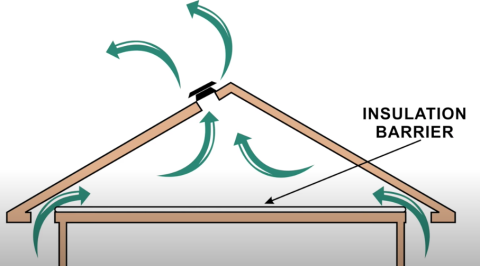
Attic Ventilation Design and Needs
Poor attic ventilation and insulation deficiencies
may have caused condensation within your attic space. The suspected source of mold in your attic is likely a result of a mixture of mold spores and excessive condensation within the attic space that have settled on organic wood material. The general rule, on the amount of total attic vent space needed, is to have at least one square foot of vent space for every 150 square feet of attic area. Ideally, half the vents should be located in the soffit at the bottom of the roof and half in gable or ridge vents near the top to allow for natural circulation of air through the attic.
Attic ventilation temperature differential
Keeping the air temperature in the attic relatively similar to the surface temperature of the wood is crucial. If there is a differential between the two, you end up reaching dew point causing excessive condensation resulting in mold growth.
How We Treat Mold in Your Crawl Space
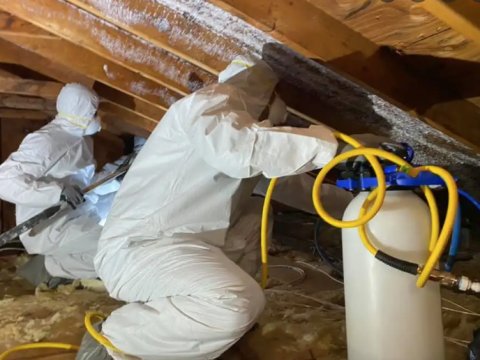
MassMold takes a comprehensive approach to crawl space mold removal. Our thorough inspection allows us to create a plan that is tailored to your home, ensuring effective results. We’ll start by isolating the mold so that it doesn’t spread during the treatment process. Then, we’ll get started on the mold abatement process, which involves a combination of chemical applications and other procedures, to completely eliminate crawl space mold.
You can rest assured that MassMold will do a thorough job with your crawl space mold removal.