Mold Preventing
Home Sale?
Mold Damage From Past Leak?
Mold Smell in Attic, Bathroom, or Basement
CALL US TODAY!
Home Owners
Realtors
Home inspectors
Your Affordable Mold Removal Focused Company
We Identify Mold, Remove, Disinfect, and Seal
We are an owner-operated, mold-removal focused company, that is designed to efficiently and affordably service your mold problem. How? We are NOT a franchised based water/ fire restoration company that focuses on expensive demolition and insurance-based jobs. We open less than 15% of our customers’ walls or flooring. MassMold’s client base is home owners who simply need to remove mold from their homes at a reasonable price.
Not all mold is dangerous! Don’t let other mold testing companies scare you. More scenarios require mold remediation services than simply water-damage events. Other situations that demand swift action by removal and remediation experts include:
- Attic & Basement Mold Removal
- Kitchen & Bathroom Mold Removal
- leaks in plumbing pipes or appliances (dishwasher, toilet, or garbage disposal) that are not noticed or visible
- Rooms, basements, or unseen, dark areas (crawl spaces or attics) where humidity is too high and damp air is trapped for an extended period
- Flooding events where remediation does not begin within 48–72 hours
- Cracks in exterior walls that allow water to seep into the building frame
- Leaks through roofs and exterior siding
Residential Mold Removal and Remediation Services Certified 5 Year Warranty
Mold Remediation South Boston
Mold remediation in South Boston is the process of identifying, removing, and preventing mold growth in residential properties through certified inspection, testing, and treatment-performed by MassMold with a focus on minimizing structural damage and protecting your home's air quality.
South Boston residents face particular moisture challenges. The neighborhood's proximity to the harbor, combined with older building stock and seasonal humidity fluctuations, creates conditions where mold takes hold in attics, basements, crawl spaces, and around windows. Many South Boston homeowners discover mold during renovations, after water events, or when respiratory symptoms prompt investigation. Whether you are preparing a property for sale, conducting a pre-purchase inspection, or concerned about air quality in your family's home, understanding what mold remediation involves-and what separates effective treatment from surface cleaning-matters.
What is the actual remediation process?
Mold remediation is not mold cleaning. Cleaning removes surface mold; remediation addresses the root cause-moisture-and eliminates the conditions that allow mold to return. MassMold begins with a detailed inspection and air quality testing to determine mold species, contamination levels, and moisture sources. This diagnostic phase is critical because different molds require different approaches, and moisture control is non-negotiable.
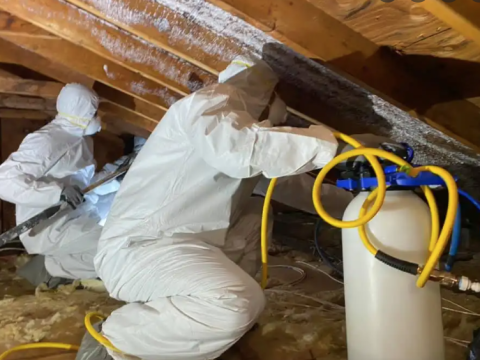
Once the scope is clear, containment begins. The team isolates the affected area using physical barriers and negative air pressure equipment to prevent spore dispersal to clean areas of your home. Affected materials-drywall, insulation, subfloors-are carefully removed and disposed of according to state guidelines. Hard surfaces are cleaned with EPA-approved antimicrobials, not bleach or caustic sprays that can damage finishes or create respiratory irritants.
MassMold opens walls in fewer than 15 percent of cases, meaning most remediation preserves your home's structure and avoids costly reconstruction.
The key difference in approach: moisture control. HVAC systems are adjusted, exhaust fans installed or redirected, and vapor barriers applied where needed. If a South Boston basement or attic has a standing water or chronic dampness issue, that is solved before remediation concludes. Materials are restored or replaced, and a final inspection with post-remediation air testing confirms the work meets clearance standards.
How does mold remediation in South Boston differ from other neighborhoods?
South Boston's coastal climate and housing typology create specific conditions. Many properties built before 1950 lack proper vapor barriers, crawl space ventilation, or basement waterproofing. Salt spray corrosion, freeze-thaw cycles, and the water table's proximity make basement mold a chronic concern. Attic mold in South Boston often stems from inadequate ventilation combined with ice damming in winter and moisture from harbor humidity in summer.
Older masonry buildings-common in South Boston-are also vulnerable. Brick absorbs moisture, mortar deteriorates, and interior mold follows. Windows and exterior walls develop thermal bridges that condense moisture when cold exterior air meets warm interior space. MassMold accounts for these specifics during inspection and remediation planning. A solution effective for a newer suburban home might fail in a century-old South Boston rowhouse because the underlying moisture mechanics are different.
Real estate transactions in South Boston often hinge on mold findings. Home inspectors and realtors familiar with the neighborhood understand that mold is not automatically a deal-breaker-but proper remediation, documentation, and a certified warranty are essential. MassMold provides a 5-year remediation warranty, giving buyers and sellers confidence that the issue is genuinely resolved, not just cosmetically covered.
What should you expect from testing and reporting?
Mold testing in South Boston involves both air sampling and surface testing. Air quality testing measures spore counts in occupied spaces and compares them to outdoor baselines; elevated indoor counts indicate active mold or recent disturbance. Surface testing-swabs, tape lifts, or bulk samples-identifies mold species and confirms contamination on visible or suspected materials. These results guide treatment decisions and establish a baseline for post-remediation clearance.
A detailed remediation report documents the extent of contamination, the methods used, materials removed or treated, and moisture control measures implemented. This report is essential for insurance claims, real estate disclosures, and future buyers' peace of mind. MassMold provides clear, technical reporting that stands up to scrutiny from inspectors, appraisers, and lenders.
If you are concerned about mold in your South Boston home or property, the first step is a professional inspection. MassMold serves homeowners, realtors, and home inspectors across Greater Boston with honest assessment and non-invasive solutions. Contact us to discuss your specific situation and learn what remediation would involve for your property. Cost varies based on contamination extent, materials affected, and moisture control measures required. A small bathroom or attic job may cost significantly less than extensive basement remediation. MassMold provides transparent quotes after inspection, with no hidden fees. Contact us for an estimate specific to your property. Most projects complete within 3 to 7 days, depending on scope. Smaller jobs can finish in 1 to 2 days; larger basement or attic remediation may take 1 to 2 weeks if structural drying is needed. MassMold will provide a timeline during the initial consultation. Yes. Containment and negative air pressure require the affected area to be sealed off, and spore disturbance can temporarily affect air quality. MassMold will advise you on the extent of the work and whether partial or complete relocation is necessary. Moisture is the root cause. In South Boston, this stems from basement water intrusion, inadequate attic ventilation, roof leaks, condensation on cold surfaces, and harbor humidity. Many older homes lack vapor barriers or proper drainage, making them especially vulnerable. Identifying and controlling moisture is essential for permanent resolution. Coverage depends on the cause and your specific policy. Water damage from storms or burst pipes is often covered; chronic moisture issues or neglect typically are not. MassMold can document the cause and extent of mold, which helps with insurance claims. Review your policy or contact your insurer for clarity. If mold is visible, you need remediation regardless of testing. Testing is most useful when mold is suspected but not obvious-after water events, with respiratory symptoms, or during pre-purchase inspections. Air quality testing confirms whether spore levels are elevated and guides cleanup verification.Frequently Asked Questions
How much does mold remediation cost in South Boston?
How long does mold remediation take?
Do I need to leave my home during mold remediation?
What causes mold in South Boston homes?
Is mold remediation covered by homeowners insurance?
How do I know if I need mold testing or just visual inspection?

FAST AND EFFICIENT PROCESS
MassMold is dedicated to helping you ensure that the property you or your clients want to buy or sell, is free from harmful mold that may pose a health risk if left unresolved.
Once we’ve determined the extent of the issue, we create a detailed plan of action to remove mold, clean your air, and restore your property. This full-service process is performed by highly trained technicians using state-of-the-art equipment, so you can be confident your home’s indoor air quality after our services.
We are passionate about not only identifying problems, but also recommending a course of action to resolve them quickly, so that you can rest assured that the house you are considering buying or selling meets all health and safety standards and is fit for habitation.
Why Do I have Mold in My Attic?
Improper Bath Fan to Soffit and Attic Venting
Soffit vents usually allow fresh air to flow into the attic, but they do not provide an exhaust mechanism. The best way to vent a bath fan out of the attic is through a vent in the roof itself. Also, a bath fan that vents directly into the attic is a guaranteed attic mold problem and oftentimes homeowners require professional attic mold removal services as a result.
Blocked Soffit Vents: Proper attic ventilation welcomes fresh air in and pushes moist air out. Generally speaking, attic ventilation relies on the fact that heat rises.
Humidifier Set Too High: Is your HVAC system over-humidifying your indoor air? It is best if you can maintain the relative humidity level within your home to between 40% and 60%.

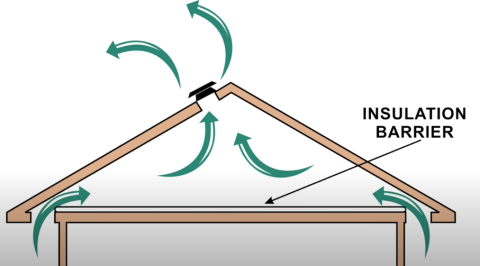
Attic Ventilation Design and Needs
Poor attic ventilation and insulation deficiencies
may have caused condensation within your attic space. The suspected source of mold in your attic is likely a result of a mixture of mold spores and excessive condensation within the attic space that have settled on organic wood material. The general rule, on the amount of total attic vent space needed, is to have at least one square foot of vent space for every 150 square feet of attic area. Ideally, half the vents should be located in the soffit at the bottom of the roof and half in gable or ridge vents near the top to allow for natural circulation of air through the attic.
Attic ventilation temperature differential
Keeping the air temperature in the attic relatively similar to the surface temperature of the wood is crucial. If there is a differential between the two, you end up reaching dew point causing excessive condensation resulting in mold growth.
How We Treat Mold in Your Crawl Space
MassMold takes a comprehensive approach to crawl space mold removal. Our thorough inspection allows us to create a plan that is tailored to your home, ensuring effective results. We’ll start by isolating the mold so that it doesn’t spread during the treatment process. Then, we’ll get started on the mold abatement process, which involves a combination of chemical applications and other procedures, to completely eliminate crawl space mold.
You can rest assured that MassMold will do a thorough job with your crawl space mold removal.