Mold Preventing
Home Sale?
Mold Damage From Past Leak?
Mold Smell in Attic, Bathroom, or Basement
CALL US TODAY!
Home Owners
Realtors
Home inspectors
Your Affordable Mold Removal Focused Company
We Identify Mold, Remove, Disinfect, and Seal
We are an owner-operated, mold-removal focused company, that is designed to efficiently and affordably service your mold problem. How? We are NOT a franchised based water/ fire restoration company that focuses on expensive demolition and insurance-based jobs. We open less than 15% of our customers’ walls or flooring. MassMold’s client base is home owners who simply need to remove mold from their homes at a reasonable price.
Not all mold is dangerous! Don’t let other mold testing companies scare you. More scenarios require mold remediation services than simply water-damage events. Other situations that demand swift action by removal and remediation experts include:
- Attic & Basement Mold Removal
- Kitchen & Bathroom Mold Removal
- leaks in plumbing pipes or appliances (dishwasher, toilet, or garbage disposal) that are not noticed or visible
- Rooms, basements, or unseen, dark areas (crawl spaces or attics) where humidity is too high and damp air is trapped for an extended period
- Flooding events where remediation does not begin within 48–72 hours
- Cracks in exterior walls that allow water to seep into the building frame
- Leaks through roofs and exterior siding

Residential Mold Removal and Remediation Services Certified 5 Year Warranty
Mold Remediation Newton Upper Falls
Mold remediation in Newton Upper Falls requires a systematic approach that starts with accurate identification and ends with verified prevention. This guide walks you through the essential steps MassMold uses to handle mold growth in residential properties throughout the Newton area, so you understand what to expect and how to protect your home.
Homeowners in Newton Upper Falls face unique moisture challenges. The neighborhood's proximity to water bodies, seasonal humidity swings, and older home construction create conditions where mold thrives in attics, basements, and crawl spaces. Whether you've spotted visible growth, noticed musty odors, or are concerned about air quality after water damage, following these steps will put you on solid ground.
Step 1: Identify Visible Mold and Document Its Location
Walk through your home and look for visible mold growth, typically appearing as black, green, or white patches. Check bathrooms, basements, attics, crawl spaces, around windows, and anywhere you see water stains or discoloration. Mold often grows in clusters and may feel fuzzy or slimy to the touch-do not disturb it yet. Take photographs from multiple angles and note the approximate size and exact location of each affected area.
Document any water damage signs: peeling paint, warped drywall, soft wood, or persistent dampness. These are roadmaps to where mold has already established and where it is likely to return. This documentation is critical because it tells you where moisture is entering or collecting in your home, which is the root cause you must address.
Step 2: Test Air Quality and Confirm Mold Presence
Visible mold is only part of the picture. Mold releases spores into the air, and elevated spore counts indicate active contamination even in areas without visible growth. Schedule professional air quality testing to establish a baseline. MassMold uses industry-standard sampling that compares indoor spore levels to outdoor levels, giving you objective data about whether mold is actively spreading.
Testing also identifies the type of mold present. Not all mold species pose the same health risk, but aggressive species or high spore loads warrant immediate action. Families with asthma, allergies, or immune sensitivities should prioritize this step-the data tells you whether remediation is urgent or whether monitoring and prevention are sufficient first.
Step 3: Locate Hidden Moisture Sources
Mold cannot grow without moisture. Before removing visible growth, you must find what is feeding it. Common moisture sources in Newton Upper Falls homes include:
- Roof leaks or ice dam damage in winter months
- Foundation cracks allowing groundwater infiltration
- Condensation in basements and crawl spaces from poor ventilation
- Bathroom and kitchen exhaust fans venting into attics instead of outdoors
- Gutter and downspout failures allowing water to pool near foundations
- Plumbing leaks behind walls or under floors
A thorough inspection using moisture detection tools pinpoints these sources. Removing mold without addressing the moisture is futile-it will return within weeks or months. MassMold's inspection process identifies both the mold and the water entry point so remediation is permanent, not temporary.
Step 4: Plan Non-Invasive Removal Where Possible
Not every Mold Remediation requires opening walls and cutting into structural elements. In fact, effective removal often succeeds without structural demolition. This is critical for homeowners in Newton Upper Falls who want to preserve their home's integrity and keep costs reasonable.
If mold is surface-level-on basement concrete, attic framing, or crawl space joists-it can be treated and cleaned using specialized equipment and antimicrobial applications. Surface removal typically takes one to three days depending on the extent of contamination. Only when mold has penetrated deep into insulation, drywall, or wood framing does structural removal become necessary. MassMold opens walls in fewer than 15 percent of cases because the majority of residential mold in Newton Upper Falls homes can be addressed through targeted, non-invasive methods.
Step 5: Execute Proper Containment and Removal
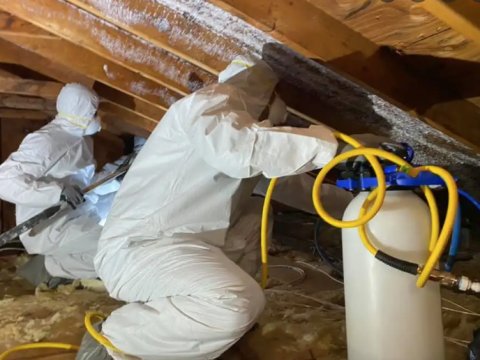
During removal, mold spores become airborne. Containment prevents cross-contamination to unaffected areas of your home. This means isolating the work zone with plastic sheeting, using negative air pressure equipment to pull contaminated air outside through HEPA filtration, and ensuring all workers wear appropriate respiratory protection.
The actual removal process involves applying antimicrobial treatments, cleaning all affected surfaces, and where necessary, removing contaminated materials (wet insulation, compromised wood, damaged drywall). All removed materials are bagged and disposed of according to environmental standards. This controlled approach keeps spores confined and prevents recontamination.
Step 6: Address the Moisture Problem Permanently
With mold removed, fix the underlying moisture issue. This might mean repairing roof leaks, installing proper attic ventilation in Newton Upper Falls homes, sealing foundation cracks, extending downspouts away from the foundation, or redirecting bathroom exhaust outdoors. Without these corrections, mold will recur.
If high humidity is the culprit, a qualified contractor may recommend a dehumidifier or improved crawl space encapsulation. If poor drainage around your foundation is the issue, regrading or installing a sump pump becomes necessary. The remedy depends entirely on what the inspection revealed.
Step 7: Verify Remediation Success with Post-Removal Testing
After removal is complete, run air quality testing again. Post-remediation spore counts should match or be lower than outdoor baseline levels. This objective confirmation tells you that remediation worked and that mold is no longer actively contaminating your home. Some homeowners also request a visual walkthrough to see the cleaned areas and understand what was addressed.
MassMold provides a certified 5-year warranty on all remediation work. This assurance is backed by expertise-the company stands behind its results because the process was thorough and the moisture source was genuinely fixed.
Mold in your Newton Upper Falls home is treatable and preventable. The process is straightforward: identify the problem, test to confirm it, find the moisture source, remove the mold safely, fix what caused it, and verify success. If you have spotted mold, noticed musty odors, experienced water damage, or have concerns about air quality, reach out to discuss your situation. MassMold serves homeowners, realtors, and home inspectors throughout the Newton area with affordable, proven remediation that keeps your home healthy and structurally sound.
Frequently Asked Questions
What is the typical cost of mold remediation in Newton Upper Falls?
Cost depends on the extent of mold, the square footage affected, whether structural removal is needed, and the moisture source repair required. Surface-level mold in a small area costs significantly less than deep contamination requiring wall opening. Contact MassMold for a specific estimate based on your home's situation.
How long does mold remediation take?
Non-invasive surface removal typically takes one to three days. Projects requiring structural work take longer depending on the scope. MassMold will provide a timeline during the initial inspection so you know what to expect.
Can I remove mold myself, or do I need a professional?
Small surface areas less than 10 square feet can sometimes be cleaned by homeowners using bleach and ventilation. Larger growth, hidden mold, or mold after water damage requires professional removal to ensure spores are contained and remediation is complete. Improper removal often spreads mold to new areas.
Why does mold keep coming back after I clean it?
Mold recurs when the moisture source is not addressed. Cleaning visible growth without fixing the leak, drainage issue, or humidity problem is temporary. Professional remediation includes identifying and correcting the underlying cause so mold does not return.
Is mold dangerous to my family's health?
Mold exposure can trigger or worsen asthma, allergies, and respiratory symptoms, particularly in children and people with immune sensitivities. Some mold species produce toxins. Air quality testing reveals whether spore levels pose a health risk and whether immediate remediation is necessary.
Do I need mold testing if I can see mold growing?
Visible mold confirms a problem, but air quality testing shows whether spores have spread beyond visible areas and helps assess health risk. Testing also identifies mold species and contamination severity, which guides the remediation approach.
How can I prevent mold from growing in my Newton Upper Falls basement?
Control moisture by improving drainage around your foundation, using a dehumidifier if humidity is high, ensuring gutters and downspouts direct water away from your home, and sealing foundation cracks. Proper ventilation and regular inspection for leaks are equally important.

FAST AND EFFICIENT PROCESS
MassMold is dedicated to helping you ensure that the property you or your clients want to buy or sell, is free from harmful mold that may pose a health risk if left unresolved.
Once we’ve determined the extent of the issue, we create a detailed plan of action to remove mold, clean your air, and restore your property. This full-service process is performed by highly trained technicians using state-of-the-art equipment, so you can be confident your home’s indoor air quality after our services.
We are passionate about not only identifying problems, but also recommending a course of action to resolve them quickly, so that you can rest assured that the house you are considering buying or selling meets all health and safety standards and is fit for habitation.
Why Do I have Mold in My Attic?
Improper Bath Fan to Soffit and Attic Venting
Soffit vents usually allow fresh air to flow into the attic, but they do not provide an exhaust mechanism. The best way to vent a bath fan out of the attic is through a vent in the roof itself. Also, a bath fan that vents directly into the attic is a guaranteed attic mold problem and oftentimes homeowners require professional attic mold removal services as a result.
Blocked Soffit Vents: Proper attic ventilation welcomes fresh air in and pushes moist air out. Generally speaking, attic ventilation relies on the fact that heat rises.
Humidifier Set Too High: Is your HVAC system over-humidifying your indoor air? It is best if you can maintain the relative humidity level within your home to between 40% and 60%.

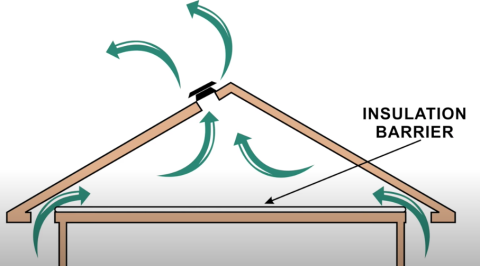
Attic Ventilation Design and Needs
Poor attic ventilation and insulation deficiencies
may have caused condensation within your attic space. The suspected source of mold in your attic is likely a result of a mixture of mold spores and excessive condensation within the attic space that have settled on organic wood material. The general rule, on the amount of total attic vent space needed, is to have at least one square foot of vent space for every 150 square feet of attic area. Ideally, half the vents should be located in the soffit at the bottom of the roof and half in gable or ridge vents near the top to allow for natural circulation of air through the attic.
Attic ventilation temperature differential
Keeping the air temperature in the attic relatively similar to the surface temperature of the wood is crucial. If there is a differential between the two, you end up reaching dew point causing excessive condensation resulting in mold growth.
How We Treat Mold in Your Crawl Space
MassMold takes a comprehensive approach to crawl space mold removal. Our thorough inspection allows us to create a plan that is tailored to your home, ensuring effective results. We’ll start by isolating the mold so that it doesn’t spread during the treatment process. Then, we’ll get started on the mold abatement process, which involves a combination of chemical applications and other procedures, to completely eliminate crawl space mold.
You can rest assured that MassMold will do a thorough job with your crawl space mold removal.