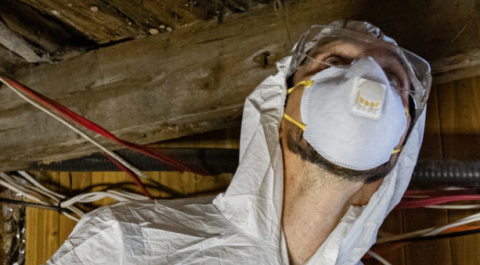
Mold Preventing
Home Sale?
Mold Damage From Past Leak?
Mold Smell in Attic, Bathroom, or Basement
CALL US TODAY!
Home Owners
Realtors
Home inspectors
Your Affordable Mold Removal Focused Company
We Identify Mold, Remove, Disinfect, and Seal
We are an owner-operated, mold-removal focused company, that is designed to efficiently and affordably service your mold problem. How? We are NOT a franchised based water/ fire restoration company that focuses on expensive demolition and insurance-based jobs. We open less than 15% of our customers’ walls or flooring. MassMold’s client base is home owners who simply need to remove mold from their homes at a reasonable price.
Not all mold is dangerous! Don’t let other mold testing companies scare you. More scenarios require mold remediation services than simply water-damage events. Other situations that demand swift action by removal and remediation experts include:
- Attic & Basement Mold Removal
- Kitchen & Bathroom Mold Removal
- leaks in plumbing pipes or appliances (dishwasher, toilet, or garbage disposal) that are not noticed or visible
- Rooms, basements, or unseen, dark areas (crawl spaces or attics) where humidity is too high and damp air is trapped for an extended period
- Flooding events where remediation does not begin within 48–72 hours
- Cracks in exterior walls that allow water to seep into the building frame
- Leaks through roofs and exterior siding

Residential Mold Removal and Remediation Services Certified 5 Year Warranty
Mold Remediation Minot
Mold remediation in Minot requires a methodical approach that balances thoroughness with the structural integrity of your home. MassMold serves homeowners throughout Minot and Greater Boston with specialized mold identification, removal, and prevention, focusing on solutions that avoid unnecessary wall openings and preserve your property's condition.
The Problem: Moisture Intrusion in Minot Homes
A homeowner in Minot discovered visible mold growth along the basement rim joist during a routine inspection. The property, built in the 1980s, had experienced minor water seepage during heavy spring rains over several years. Rather than ignore the issue, the owner recognized that mold in basements can proliferate rapidly in climates with seasonal moisture fluctuations, eventually affecting air quality throughout the home.
The initial concern was reasonable: would remediation require removing sections of wall, exposing the foundation, and creating months of disruption? Many homeowners in Minot face this same anxiety when confronting basement or attic mold. The standard assumption is that thorough mold removal demands invasive structural work.
MassMold's Diagnostic and Remediation Approach
MassMold began with a comprehensive mold inspection and air quality testing to establish the true extent of contamination. The assessment identified three specific areas of concern:
- Mold colonization on the rim joist at the mudsill connection, the primary failure point where foundation concrete meets wood framing
- Elevated moisture readings (18-22% wood moisture content) in adjacent framing members, indicating active moisture migration
- Spore counts in the basement air running 40% above outdoor baseline levels, suggesting viable mold was still actively dispersing
Rather than opening walls immediately, MassMold employed a non-invasive protocol:
- Source isolation: Identified water entry points through the rim joist and foundation micro-cracks using moisture mapping and thermal imaging
- Surface remediation: Removed visible mold colonies using controlled demolition of contaminated wood fibers and HEPA-filtered vacuuming
- Moisture management: Applied specialized sealants and vapor barriers to halt capillary rise from the foundation without removing wall sections
- Ventilation improvement: Upgraded basement exhaust capacity and installed a continuous perimeter drain system to direct water away from the foundation
- Verification testing: Conducted post-remediation air quality sampling to confirm spore counts had returned to ambient outdoor levels
This approach reflects MassMold's core principle: in less than 15% of cases, wall removal becomes necessary. By diagnosing moisture sources accurately, the remediation work focused on prevention rather than structural demolition.
Results: Structural Integrity and Long-Term Prevention
The remediation was completed within two weeks. Post-remediation testing showed mold spore counts dropped to 8-12 spores per cubic meter, matching outdoor ambient levels. The homeowner received a certified 5-year warranty covering the treated areas, contingent on maintaining the new perimeter drainage system and basement ventilation as specified.
No walls were opened. No framing members were removed. The basement remained accessible and usable throughout the process. The homeowner's costs reflected the targeted, non-invasive scope rather than the wholesale structural replacement that invasive methods would have required.
Beyond the immediate remediation, MassMold provided the homeowner with a written maintenance protocol addressing the seasonal moisture patterns specific to Minot. The protocol included quarterly inspections during spring and fall transition periods, when rim joist moisture is most likely to spike due to groundwater fluctuation and condensation cycling.
Why Minot Homeowners Choose Non-Invasive Remediation
Minot's location in the Boston suburbs places it in a climate zone with significant seasonal humidity and variable groundwater conditions. Older homes-particularly those built before modern vapor barrier standards-are especially prone to rim joist and basement mold issues. Water damage and mold growth in basements and crawl spaces are common, making targeted, non-invasive solutions both practical and economical.
Owner-operated mold remediation companies like MassMold can customize the approach to each property's actual conditions, whereas larger franchise operations often default to worst-case remediation protocols that include unnecessary structural work. The difference in cost and disruption is substantial for homeowners in Minot facing mold in their basements, attics, or bathrooms.
Testing and Documentation for Real Estate and Peace of Mind
For homeowners selling property in Minot or preparing for a purchase, mold testing and remediation documentation are essential. MassMold provides written reports and photographic evidence acceptable to lenders, appraisers, and title companies. The mold removal company also serves realtors and home inspectors in Minot who require reliable, affordable referrals for clients needing quick remediation before closing.
If you are dealing with visible mold, water damage, or elevated moisture in any part of your Minot home, MassMold can evaluate the situation with no pressure to over-remediate. The company focuses on identifying the actual problem, proposing the minimum necessary work, and protecting your property long-term. Contact MassMold to schedule a mold inspection and receive a clear assessment of what your home actually needs.
Frequently Asked Questions
What causes mold in basements in Minot, MA?
Mold in basements typically results from moisture intrusion through the rim joist, foundation cracks, or capillary rise from the soil. Minot's seasonal groundwater fluctuations and spring thaw cycles make basements especially vulnerable. Inadequate drainage or poor ventilation accelerates mold growth once moisture is present.
How much does mold remediation cost in Minot?
Costs vary based on the extent of contamination, affected area, and whether invasive removal is required. Non-invasive remediation targeting a single basement section typically costs significantly less than structural work. MassMold provides a detailed quote after inspection so you know the actual scope before work begins.
Do I need to open walls to remove mold?
Not always. MassMold uses non-invasive diagnostics and targeted remediation methods that avoid wall openings in more than 85% of cases. Wall removal becomes necessary only when mold has deeply colonized framing members that cannot be treated externally. The inspection determines whether your situation requires structural work.
How long does mold remediation take?
Most non-invasive remediation jobs are completed within one to three weeks, depending on the size of the affected area and the remediation protocol required. The timeline becomes longer only if wall sections must be opened or if extensive drying is needed after moisture mitigation.
What is the difference between mold testing and mold remediation?
Mold testing and inspection identify whether mold is present, measure spore levels in the air, and pinpoint moisture sources. Remediation is the actual removal and treatment work that follows testing. MassMold provides both services, using test results to design a targeted remediation plan rather than guessing at the scope.
Is mold remediation covered by homeowners insurance?
Coverage depends on the cause of the moisture. If mold results from a sudden, accidental event like a burst pipe, insurance may cover it. If mold develops from gradual moisture intrusion or lack of maintenance, it is typically the homeowner's responsibility. Review your policy and discuss your specific situation with your insurer.
How can I prevent mold from returning after remediation?
Prevention requires controlling moisture: maintain proper foundation drainage, ensure basements and attics are well-ventilated, and address water leaks immediately. MassMold provides written maintenance protocols after remediation, including seasonal inspection schedules specific to your home's vulnerabilities. The 5-year warranty covers treated areas if maintenance is performed as specified.

FAST AND EFFICIENT PROCESS
MassMold is dedicated to helping you ensure that the property you or your clients want to buy or sell, is free from harmful mold that may pose a health risk if left unresolved.
Once we’ve determined the extent of the issue, we create a detailed plan of action to remove mold, clean your air, and restore your property. This full-service process is performed by highly trained technicians using state-of-the-art equipment, so you can be confident your home’s indoor air quality after our services.
We are passionate about not only identifying problems, but also recommending a course of action to resolve them quickly, so that you can rest assured that the house you are considering buying or selling meets all health and safety standards and is fit for habitation.
Why Do I have Mold in My Attic?
Improper Bath Fan to Soffit and Attic Venting
Soffit vents usually allow fresh air to flow into the attic, but they do not provide an exhaust mechanism. The best way to vent a bath fan out of the attic is through a vent in the roof itself. Also, a bath fan that vents directly into the attic is a guaranteed attic mold problem and oftentimes homeowners require professional attic mold removal services as a result.
Blocked Soffit Vents: Proper attic ventilation welcomes fresh air in and pushes moist air out. Generally speaking, attic ventilation relies on the fact that heat rises.
Humidifier Set Too High: Is your HVAC system over-humidifying your indoor air? It is best if you can maintain the relative humidity level within your home to between 40% and 60%.

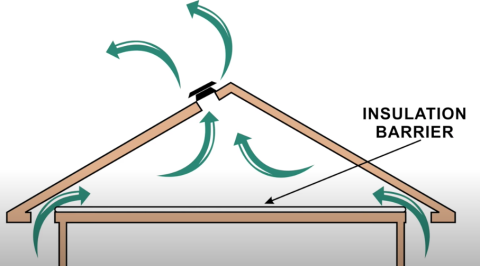
Attic Ventilation Design and Needs
Poor attic ventilation and insulation deficiencies
may have caused condensation within your attic space. The suspected source of mold in your attic is likely a result of a mixture of mold spores and excessive condensation within the attic space that have settled on organic wood material. The general rule, on the amount of total attic vent space needed, is to have at least one square foot of vent space for every 150 square feet of attic area. Ideally, half the vents should be located in the soffit at the bottom of the roof and half in gable or ridge vents near the top to allow for natural circulation of air through the attic.
Attic ventilation temperature differential
Keeping the air temperature in the attic relatively similar to the surface temperature of the wood is crucial. If there is a differential between the two, you end up reaching dew point causing excessive condensation resulting in mold growth.
How We Treat Mold in Your Crawl Space
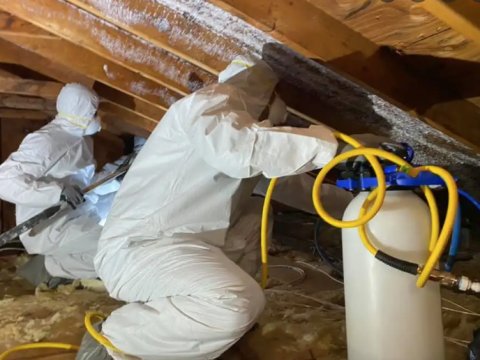
MassMold takes a comprehensive approach to crawl space mold removal. Our thorough inspection allows us to create a plan that is tailored to your home, ensuring effective results. We’ll start by isolating the mold so that it doesn’t spread during the treatment process. Then, we’ll get started on the mold abatement process, which involves a combination of chemical applications and other procedures, to completely eliminate crawl space mold.
You can rest assured that MassMold will do a thorough job with your crawl space mold removal.