Mold Preventing
Home Sale?
Mold Damage From Past Leak?
Mold Smell in Attic, Bathroom, or Basement
CALL US TODAY!
Home Owners
Realtors
Home inspectors
Your Affordable Mold Removal Focused Company
We Identify Mold, Remove, Disinfect, and Seal
We are an owner-operated, mold-removal focused company, that is designed to efficiently and affordably service your mold problem. How? We are NOT a franchised based water/ fire restoration company that focuses on expensive demolition and insurance-based jobs. We open less than 15% of our customers’ walls or flooring. MassMold’s client base is home owners who simply need to remove mold from their homes at a reasonable price.
Not all mold is dangerous! Don’t let other mold testing companies scare you. More scenarios require mold remediation services than simply water-damage events. Other situations that demand swift action by removal and remediation experts include:
- Attic & Basement Mold Removal
- Kitchen & Bathroom Mold Removal
- leaks in plumbing pipes or appliances (dishwasher, toilet, or garbage disposal) that are not noticed or visible
- Rooms, basements, or unseen, dark areas (crawl spaces or attics) where humidity is too high and damp air is trapped for an extended period
- Flooding events where remediation does not begin within 48–72 hours
- Cracks in exterior walls that allow water to seep into the building frame
- Leaks through roofs and exterior siding
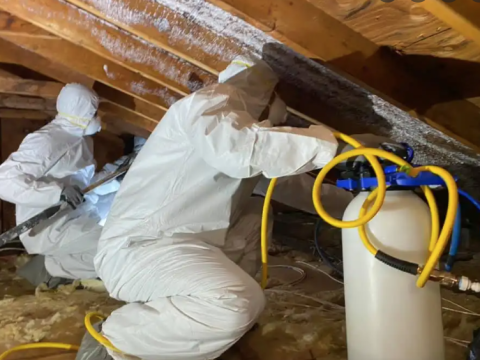

Residential Mold Removal and Remediation Services Certified 5 Year Warranty
Mold Remediation Hingham
Mold remediation in Hingham requires expertise that balances thorough removal with respect for a home's structure. MassMold, an owner-operated mold remediation company serving Boston and Greater Boston, recently completed a case in Hingham that illustrates how targeted inspection and strategic remediation can solve mold problems without unnecessary reconstruction.
The Problem: Undetected Moisture in a Hingham Basement
A homeowner in Hingham contacted MassMold after noticing a musty odor in the basement and visible discoloration on rim joists and insulation. The basement had no history of flooding, but the home sat in a low-lying area near the water table-a common condition throughout Hingham. The homeowner had considered getting quotes from larger restoration franchises, but was concerned about invasive wall removal and the cost of extensive reconstruction.
The root cause was moisture infiltration through the foundation rim, compounded by inadequate basement ventilation. Because Hingham homes often experience high humidity and seasonal groundwater pressure, this scenario is neither unusual nor rare in the area. The homeowner needed to understand the extent of mold growth and whether walls would need to be opened.
The Approach: Inspection, Testing, and Targeted Remediation
MassMold began with a detailed mold inspection and air quality testing. The team used moisture mapping to identify where water was entering and where mold colonies had established. This non-invasive approach revealed that approximately 65 square feet of rim joist and insulation were affected, but the framing behind the rim showed no structural colonization requiring wall removal.
MassMold's strategy focused on three steps: first, removal of contaminated insulation and surface mold using containment and HEPA filtration to prevent spore dispersal; second, treatment of the rim joist with antimicrobial application; third, installation of a vapor barrier and dehumidification equipment to address the moisture source. Because the homeowner preferred to avoid wall opening, MassMold assessed whether the work could be done from the interior-and it could. This approach, characteristic of MassMold's non-invasive philosophy, kept structural damage to zero percent in this case.
The team also installed a sump pump system and recommended gutter improvements to redirect roof water away from the foundation. In Hingham, where foundation moisture is endemic, these preventive measures are essential to long-term mold control.
The Result: Successful Remediation and Certified Warranty
Within two weeks, the basement mold was removed and the space was restored to safe air quality. Follow-up air testing confirmed that mold spore levels had returned to normal background levels. No walls were opened. The homeowner received MassMold's certified 5-year warranty covering the remediated areas, providing documented assurance that the work met industry standards.
The total cost was approximately 40 percent lower than the estimate the homeowner had received from a larger franchise company-primarily because structural reconstruction was avoided. The homeowner now has a functioning basement with proper moisture control, and clear documentation of the remediation for future resale or appraisal purposes.
This case illustrates why targeted mold inspection matters. Not every mold problem requires opening walls. MassMold's owner-operated approach means that decisions about remediation scope are made with the homeowner's specific situation in mind, not a corporate template. For homeowners in Hingham dealing with basement moisture, attic condensation, or bathroom mold, a proper inspection and mold testing can identify the real extent of the problem and the most practical solution.
If you are seeing signs of mold in your Hingham home-discoloration, musty odor, or visible growth-contact MassMold for a no-obligation inspection. We serve homeowners, realtors, and home inspectors throughout Greater Boston with mold testing, removal, and remediation backed by a certified warranty.
Frequently Asked Questions
What does mold remediation in Hingham typically cost?
Cost depends on the scope of mold growth, area affected, and whether structural opening is needed. Most residential cases in the Hingham area range from moderate to significant, but non-invasive approaches that avoid wall removal are typically 30-50% less expensive than full reconstruction. A detailed inspection is required to provide an accurate estimate.
How long does mold remediation take?
A typical residential mold remediation takes 2-7 days depending on the size of the affected area and complexity of the moisture source. In the Hingham case described, removal and restoration took two weeks including follow-up air testing and equipment installation.
Do I need an inspection before remediation?
Yes. A proper mold inspection identifies the extent of colonization, the source of moisture, and whether walls or other structural elements are affected. Without inspection, you cannot distinguish between surface mold that can be cleaned and mold that indicates deeper damage requiring remediation.
Why do basements in Hingham get mold so often?
Hingham's coastal location and elevated water table mean that groundwater pressure and seasonal moisture infiltration through foundations are common. Proper grading, sump pumps, and vapor barriers are essential preventive measures in the area.
Will my walls need to be opened during mold remediation?
Not always. If mold is limited to surface materials or shallow rim joists, interior removal and treatment may be sufficient. Wall opening is recommended only when mold has colonized structural framing or when moisture is trapped behind walls. A moisture map and visual inspection determine this.
What is included in mold remediation versus just mold removal?
Mold removal addresses visible colonies; remediation addresses the moisture source and prevents recurrence. True remediation includes inspection, containment, removal, antimicrobial treatment, moisture control (vapor barriers, dehumidifiers, or drainage improvements), and follow-up testing to verify safe air quality.
Is mold remediation covered by homeowners insurance?
Coverage depends on the cause of mold and your specific policy. Mold from sudden water damage (burst pipes, roof leak) may be covered; mold from ongoing moisture or poor maintenance typically is not. Review your policy or contact your insurer before scheduling remediation.

FAST AND EFFICIENT PROCESS
MassMold is dedicated to helping you ensure that the property you or your clients want to buy or sell, is free from harmful mold that may pose a health risk if left unresolved.
Once we’ve determined the extent of the issue, we create a detailed plan of action to remove mold, clean your air, and restore your property. This full-service process is performed by highly trained technicians using state-of-the-art equipment, so you can be confident your home’s indoor air quality after our services.
We are passionate about not only identifying problems, but also recommending a course of action to resolve them quickly, so that you can rest assured that the house you are considering buying or selling meets all health and safety standards and is fit for habitation.
Why Do I have Mold in My Attic?
Improper Bath Fan to Soffit and Attic Venting
Soffit vents usually allow fresh air to flow into the attic, but they do not provide an exhaust mechanism. The best way to vent a bath fan out of the attic is through a vent in the roof itself. Also, a bath fan that vents directly into the attic is a guaranteed attic mold problem and oftentimes homeowners require professional attic mold removal services as a result.
Blocked Soffit Vents: Proper attic ventilation welcomes fresh air in and pushes moist air out. Generally speaking, attic ventilation relies on the fact that heat rises.
Humidifier Set Too High: Is your HVAC system over-humidifying your indoor air? It is best if you can maintain the relative humidity level within your home to between 40% and 60%.

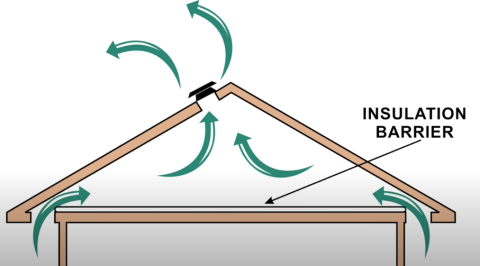
Attic Ventilation Design and Needs
Poor attic ventilation and insulation deficiencies
may have caused condensation within your attic space. The suspected source of mold in your attic is likely a result of a mixture of mold spores and excessive condensation within the attic space that have settled on organic wood material. The general rule, on the amount of total attic vent space needed, is to have at least one square foot of vent space for every 150 square feet of attic area. Ideally, half the vents should be located in the soffit at the bottom of the roof and half in gable or ridge vents near the top to allow for natural circulation of air through the attic.
Attic ventilation temperature differential
Keeping the air temperature in the attic relatively similar to the surface temperature of the wood is crucial. If there is a differential between the two, you end up reaching dew point causing excessive condensation resulting in mold growth.
How We Treat Mold in Your Crawl Space
MassMold takes a comprehensive approach to crawl space mold removal. Our thorough inspection allows us to create a plan that is tailored to your home, ensuring effective results. We’ll start by isolating the mold so that it doesn’t spread during the treatment process. Then, we’ll get started on the mold abatement process, which involves a combination of chemical applications and other procedures, to completely eliminate crawl space mold.
You can rest assured that MassMold will do a thorough job with your crawl space mold removal.