Mold Preventing
Home Sale?
Mold Damage From Past Leak?
Mold Smell in Attic, Bathroom, or Basement
CALL US TODAY!
Home Owners
Realtors
Home inspectors
Your Affordable Mold Removal Focused Company
We Identify Mold, Remove, Disinfect, and Seal
We are an owner-operated, mold-removal focused company, that is designed to efficiently and affordably service your mold problem. How? We are NOT a franchised based water/ fire restoration company that focuses on expensive demolition and insurance-based jobs. We open less than 15% of our customers’ walls or flooring. MassMold’s client base is home owners who simply need to remove mold from their homes at a reasonable price.
Not all mold is dangerous! Don’t let other mold testing companies scare you. More scenarios require mold remediation services than simply water-damage events. Other situations that demand swift action by removal and remediation experts include:
- Attic & Basement Mold Removal
- Kitchen & Bathroom Mold Removal
- leaks in plumbing pipes or appliances (dishwasher, toilet, or garbage disposal) that are not noticed or visible
- Rooms, basements, or unseen, dark areas (crawl spaces or attics) where humidity is too high and damp air is trapped for an extended period
- Flooding events where remediation does not begin within 48–72 hours
- Cracks in exterior walls that allow water to seep into the building frame
- Leaks through roofs and exterior siding
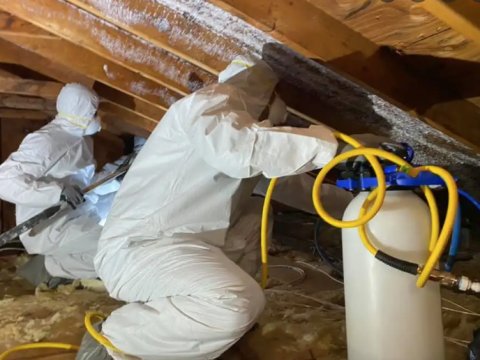

Residential Mold Removal and Remediation Services Certified 5 Year Warranty
Mold Remediation East Boston
Mold remediation in East Boston is the process of identifying, isolating, removing, and preventing mold growth in residential properties through systematic inspection, testing, and targeted remediation techniques. East Boston residents-many living in older waterfront properties, multi-family buildings, and structures built near sea-level-face unique moisture challenges from salt spray, high humidity, and aging building envelopes. This guide walks you through the professional remediation process that MassMold uses to address mold issues without unnecessary structural disruption.
By following this approach, you will understand what happens during a professional remediation, what to expect at each stage, and how to work with a qualified contractor to restore your property safely and affordably. The steps below reflect industry-standard methodology and the non-invasive approach MassMold applies to most East Boston homes.
Step 1: Schedule a Professional Mold Inspection and Air Quality Assessment
Contact a mold remediation contractor to arrange an on-site inspection. The inspector will visually examine all accessible areas-attics, basements, crawl spaces, bathrooms, and around water entry points-and take air quality samples to measure spore levels both inside and outside the home. This baseline is critical because visible mold is often only part of the problem; airborne spores indicate whether mold is actively releasing contamination or whether remediation is needed beyond what the eye can see.
During the inspection, document moisture sources. Common culprits in East Boston include leaking roof valleys, foundation seepage from heavy rain or storm surge, inadequate attic ventilation, and bathroom exhaust ducted into attics instead of to the exterior. The inspector will identify these defects and recommend which must be corrected before or during remediation to prevent recontamination.
Step 2: Obtain Mold Testing Results and Review the Remediation Plan
Laboratory analysis of air and surface samples typically takes 5-10 business days. Once results are in, your contractor will present a detailed remediation scope that specifies which areas require treatment, the methods to be used, and whether containment or full isolation will be necessary. For properties in East Boston with mold confined to small, accessible areas-such as surface growth in a basement corner or isolated attic mold-the contractor can often avoid opening walls. MassMold's approach opens structural walls in fewer than 15 percent of cases, minimizing your home's exposure and repair costs.
Review the plan carefully. It should specify whether the work will use dry ice blasting, HEPA vacuuming, enzymatic treatment, or encapsulation depending on the substrate and mold type. Ask your contractor whether they will address root causes-such as upgrading attic ventilation or waterproofing basement walls-as part of the scope, because remediation without moisture control typically fails within months.
Step 3: Prepare the Work Area and Set Up Containment if Needed
On the day work begins, the contractor will seal off the remediation zone with plastic sheeting and tape to prevent spores from traveling to unaffected areas of your East Boston home. If the mold is in an attic or isolated basement section, a negative-pressure system may be set up to pull air out of the containment area through HEPA filtration. This ensures that air movement works against the spread of contamination, not with it.
Furniture, personal items, and pets should be moved out of the work zone or to another room with doors closed. The contractor will protect HVAC returns and any openings that connect the affected space to the rest of the home. This preparation stage is essential in older East Boston homes where rooms may be interconnected without modern ductwork, making containment more challenging.
Step 4: Remove Contaminated Materials and Treat Affected Surfaces
Heavily colonized materials-drywall, insulation, wood framing showing active mold-are removed and disposed of as contaminated waste. The contractor will bag and seal these items before moving them through the home to prevent re-aerosolization of spores. Once the contaminated substrate is gone, the bare framing and solid surfaces are cleaned using HEPA-filtered vacuuming and antimicrobial treatment appropriate to the material type.
For mold growing on solid surfaces such as concrete basement floors or roof decking, scrubbing with enzymatic or oxidizing cleaners breaks down the mold's cellular structure. The goal is not just to remove visible growth but to eliminate the biochemical residue that allows mold to re-establish. In East Boston properties with high humidity or previous water intrusion, this step is often paired with application of a mold-inhibiting primer or encapsulant to prevent rapid recolonization.
Step 5: Address Moisture Sources and Restore Ventilation
Once mold is removed, the contractor addresses the underlying moisture problem or the remediation will fail. This may include installing or upgrading attic ventilation to reduce humidity, sealing roof leaks, grading the ground away from the foundation, or applying basement waterproofing membranes. In East Boston, where many homes are older and foundation drainage systems may be compromised, this step often involves installing interior or exterior perimeter drainage or sump pump systems.
Because mold requires three conditions-organic material, darkness, and moisture above 60 percent relative humidity-removing any one of these stops mold growth. Moisture control is the most practical lever; a dry home does not grow mold, regardless of when the spores arrive.
Your contractor should also ensure that bathroom exhaust fans and kitchen vents discharge directly outside, not into the attic or crawl space. This simple fix prevents moisture from accumulating in hidden spaces where new mold colonies would thrive unseen.
Step 6: Post-Remediation Verification and Air Quality Retesting
After cleanup and drying are complete, the contractor performs a final walkthrough to confirm all visible mold has been removed and containment has been safely dismantled. Post-remediation air sampling is then conducted to measure spore levels again. Results should show that indoor air spore counts are at or below outdoor baseline levels, confirming that the remediation has successfully reduced airborne contamination.
MassMold provides a certified 5-year warranty on remediation work, which gives you documented assurance that the work meets industry standards and protects you if mold returns in the treated areas due to inadequate execution rather than new moisture intrusion. Request this verification report in writing and retain it for your records and for any future property sale or insurance claim.
Step 7: Establish Ongoing Monitoring and Maintenance
Mold prevention is continuous in East Boston's damp climate. Run exhaust fans during and after showers; ensure attic vents and soffit vents remain clear of debris; inspect roof flashing and gutters annually; and monitor basement walls and crawl spaces for new signs of moisture or discoloration. Install or maintain a hygrometer to track indoor humidity; keeping it below 50 percent relative humidity makes mold growth unlikely even if moisture temporarily enters the home.
If you notice new water stains, odors, or visible growth within the first year after remediation, contact your contractor immediately. Early intervention on new problems is far less expensive than waiting for mold to spread.
Mold remediation is a systematic process, not a one-time spray-and-forget treatment. East Boston homeowners who follow these steps and partner with a mold remediation contractor committed to non-invasive, moisture-aware solutions protect their homes' structural integrity and air quality. If you are dealing with suspected mold or have experienced water damage, MassMold is ready to inspect your property, explain your options clearly, and execute remediation with minimal disruption. Reach out to discuss your situation and learn how we can help restore your home.
Frequently Asked Questions
How much does mold remediation cost in East Boston?
The cost of mold remediation in East Boston depends on the size of the affected area, the extent of contamination, whether moisture sources must be repaired, and whether walls need to be opened. A small attic or basement mold project may range from several hundred to a few thousand dollars, while larger jobs involving structural repairs cost more. Contact MassMold for a free inspection and written scope of work so you understand exactly what needs to be done and what it will cost.
Can mold remediation be done without opening walls?
Yes, in many cases. Non-invasive techniques such as HEPA vacuuming, enzymatic surface treatment, and dry ice blasting can remove mold from accessible areas without disturbing the home's structure. However, if mold has colonized within wall cavities or beneath flooring and is causing structural damage or recurring air quality problems, opening walls may be necessary for proper remediation. MassMold uses non-invasive approaches in fewer than 15 percent of cases, minimizing damage.
How long does mold remediation take?
A typical residential mold remediation project in East Boston takes 3 to 7 days, depending on the scope. Small surface removals may be completed in a single day, while projects requiring moisture repairs, drying time, or structural work take longer. Your contractor will provide a timeline as part of the remediation plan so you know what to expect.
What causes mold in East Boston homes?
Mold in East Boston is typically caused by high humidity from proximity to the harbor, poor attic or basement ventilation, roof or foundation leaks, and aging building envelopes common in older properties. Winter condensation and spring thaw water intrusion are seasonal triggers. Addressing these moisture sources is essential to prevent mold from recurring.
Do I need air quality testing as part of mold remediation?
Yes, air quality testing before and after remediation confirms that mold spore levels have been reduced to acceptable levels and that your indoor air is no longer contaminated. Pre-remediation testing also helps the contractor identify whether visible mold is the only problem or whether hidden mold is releasing spores throughout your home. Post-remediation testing verifies the work was successful.

FAST AND EFFICIENT PROCESS
MassMold is dedicated to helping you ensure that the property you or your clients want to buy or sell, is free from harmful mold that may pose a health risk if left unresolved.
Once we’ve determined the extent of the issue, we create a detailed plan of action to remove mold, clean your air, and restore your property. This full-service process is performed by highly trained technicians using state-of-the-art equipment, so you can be confident your home’s indoor air quality after our services.
We are passionate about not only identifying problems, but also recommending a course of action to resolve them quickly, so that you can rest assured that the house you are considering buying or selling meets all health and safety standards and is fit for habitation.
Why Do I have Mold in My Attic?
Improper Bath Fan to Soffit and Attic Venting
Soffit vents usually allow fresh air to flow into the attic, but they do not provide an exhaust mechanism. The best way to vent a bath fan out of the attic is through a vent in the roof itself. Also, a bath fan that vents directly into the attic is a guaranteed attic mold problem and oftentimes homeowners require professional attic mold removal services as a result.
Blocked Soffit Vents: Proper attic ventilation welcomes fresh air in and pushes moist air out. Generally speaking, attic ventilation relies on the fact that heat rises.
Humidifier Set Too High: Is your HVAC system over-humidifying your indoor air? It is best if you can maintain the relative humidity level within your home to between 40% and 60%.

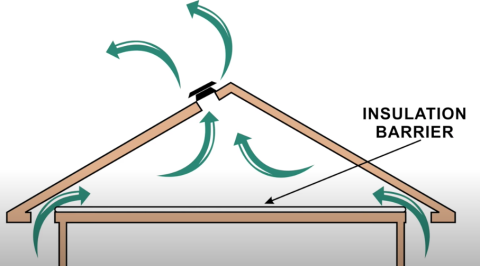
Attic Ventilation Design and Needs
Poor attic ventilation and insulation deficiencies
may have caused condensation within your attic space. The suspected source of mold in your attic is likely a result of a mixture of mold spores and excessive condensation within the attic space that have settled on organic wood material. The general rule, on the amount of total attic vent space needed, is to have at least one square foot of vent space for every 150 square feet of attic area. Ideally, half the vents should be located in the soffit at the bottom of the roof and half in gable or ridge vents near the top to allow for natural circulation of air through the attic.
Attic ventilation temperature differential
Keeping the air temperature in the attic relatively similar to the surface temperature of the wood is crucial. If there is a differential between the two, you end up reaching dew point causing excessive condensation resulting in mold growth.
How We Treat Mold in Your Crawl Space
MassMold takes a comprehensive approach to crawl space mold removal. Our thorough inspection allows us to create a plan that is tailored to your home, ensuring effective results. We’ll start by isolating the mold so that it doesn’t spread during the treatment process. Then, we’ll get started on the mold abatement process, which involves a combination of chemical applications and other procedures, to completely eliminate crawl space mold.
You can rest assured that MassMold will do a thorough job with your crawl space mold removal.