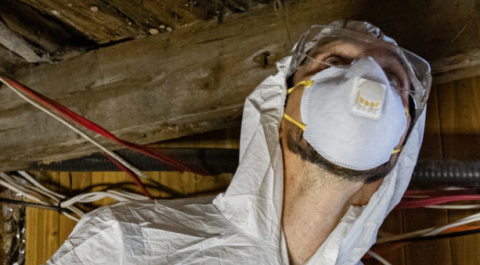
Mold Preventing
Home Sale?
Mold Damage From Past Leak?
Mold Smell in Attic, Bathroom, or Basement
CALL US TODAY!
Home Owners
Realtors
Home inspectors
Your Affordable Mold Removal Focused Company
We Identify Mold, Remove, Disinfect, and Seal
We are an owner-operated, mold-removal focused company, that is designed to efficiently and affordably service your mold problem. How? We are NOT a franchised based water/ fire restoration company that focuses on expensive demolition and insurance-based jobs. We open less than 15% of our customers’ walls or flooring. MassMold’s client base is home owners who simply need to remove mold from their homes at a reasonable price.
Not all mold is dangerous! Don’t let other mold testing companies scare you. More scenarios require mold remediation services than simply water-damage events. Other situations that demand swift action by removal and remediation experts include:
- Attic & Basement Mold Removal
- Kitchen & Bathroom Mold Removal
- leaks in plumbing pipes or appliances (dishwasher, toilet, or garbage disposal) that are not noticed or visible
- Rooms, basements, or unseen, dark areas (crawl spaces or attics) where humidity is too high and damp air is trapped for an extended period
- Flooding events where remediation does not begin within 48–72 hours
- Cracks in exterior walls that allow water to seep into the building frame
- Leaks through roofs and exterior siding
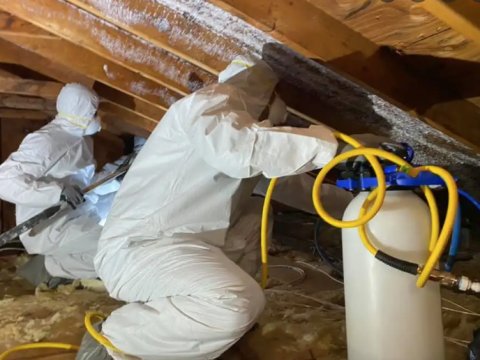

Residential Mold Removal and Remediation Services Certified 5 Year Warranty
Mold Remediation Cambridge
Mold remediation in Cambridge is the process of identifying, removing, and preventing mold growth in residential properties-a service that addresses both immediate health concerns and structural integrity. Cambridge homeowners face particular moisture challenges due to the area's climate, aging housing stock, and proximity to water sources, making professional mold assessment and removal essential for maintaining safe living conditions.
MassMold serves Cambridge and Greater Boston with owner-operated mold remediation that prioritizes minimal structural disruption. Unlike larger franchise operations, this company approaches each property individually, opening walls in fewer than 15 percent of cases and offering non-invasive solutions wherever they are effective.
Understanding Mold in Cambridge Homes
Cambridge's climate-characterized by seasonal humidity, freeze-thaw cycles, and significant precipitation-creates ideal conditions for mold growth. The city's housing profile, with many older properties featuring outdated moisture barriers, inadequate ventilation, and aging foundations, compounds the risk. Basements, attics, bathrooms, and crawl spaces are the most vulnerable areas.
Mold thrives on moisture and organic material. In Cambridge, sources include roof leaks, plumbing failures, basement seepage, poor drainage around foundations, and high indoor humidity from cooking, showers, and laundry. Because Cambridge experiences significant temperature fluctuations and receives substantial rainfall, condensation problems are common, particularly in poorly insulated attics and basements lacking proper ventilation.
Most mold problems in Cambridge can be resolved without invasive wall demolition when caught early and addressed with the right diagnosis and technique.
Early detection matters. Visible mold growth-whether black, green, or white-signals a moisture problem that will worsen if ignored. Hidden mold behind walls or within insulation is more dangerous because it grows unchecked. Professional mold testing and inspection identifies both visible and concealed contamination, revealing the moisture source so it can be stopped.
How Professional Mold Remediation Works in Cambridge
Professional mold remediation follows a structured process designed to remove contamination safely and prevent recurrence. MassMold begins with thorough inspection and mold testing to determine the extent and type of contamination, then develops a remediation plan tailored to each property's specific conditions.
The remediation process typically includes moisture source identification and repair, containment of affected areas to prevent spore spread, removal of contaminated materials, professional cleaning and treatment, and verification through post-remediation air quality testing. Because Cambridge homes vary widely in age, construction, and condition, the approach differs from property to property.
Non-invasive methods are prioritized. These include targeted removal of affected drywall sections, HVAC cleaning, encapsulation treatments, and dehumidification. When structural damage is minimal, these techniques resolve the mold problem without requiring complete wall reconstruction, reducing both cost and disruption to your home.
In cases where mold has penetrated deep into framing or extensive water damage exists, wall opening becomes necessary. However, this remains the exception rather than the rule. A certified professional can often identify which approach is appropriate after proper inspection.
Why Air Quality and Testing Matter for Cambridge Properties
Mold spores exist naturally in the air, but elevated concentrations indicate an active contamination problem. Air quality testing measures spore levels before, during, and after remediation, providing objective data about whether the work has been effective.
Cambridge families with respiratory concerns, allergies, or asthma benefit from baseline air quality testing, which identifies whether mold is contributing to indoor air problems. This is especially valuable during home inspections and pre-purchase evaluations, when buyers need assurance about a property's condition before committing to purchase.
Real estate transactions in Cambridge often involve mold contingencies. Home inspectors and realtors rely on professional mold assessment to determine whether contamination exists and whether remediation is required before sale. Comprehensive mold testing and inspection documents the property's condition objectively, reducing disputes and protecting all parties.
MassMold provides mold testing, inspection, and air quality testing as standalone services or as part of full remediation projects. Testing results are documented and can be provided to real estate professionals, inspectors, or lenders as needed.
Practical Steps for Cambridge Homeowners
If you suspect mold in your Cambridge home, start with professional inspection rather than attempting DIY removal. Surface cleaning does not address the moisture source, so mold will return. Professional diagnosis ensures the root cause is identified and corrected.
Monitor moisture-prone areas regularly. Basements should be checked after heavy rain or spring snowmelt. Attics should be inspected for roof leaks, proper ventilation, and condensation. Bathrooms need adequate exhaust ventilation during and after showers. Crawl spaces require vapor barriers and drainage management. Early attention to moisture prevents the conditions under which mold develops.
If you plan to buy, sell, or refinance a Cambridge property, include professional mold testing in your due diligence. Many lenders require evidence that mold remediation has been completed if contamination is discovered. Documentation of certified remediation work protects your investment.
When selecting a mold remediation company, prioritize those with owner operation, local experience in Cambridge properties, and verifiable credentials. Ask about their approach to minimal-damage remediation and what warranty they provide on their work. A company willing to explain its methods and answer questions is more likely to deliver appropriate solutions.
If you've identified mold growth, experienced unexplained moisture problems, or have concerns about air quality in your Cambridge home, professional assessment is your next step. MassMold provides comprehensive mold testing, inspection, and removal tailored to your property's specific situation. Contact the team to discuss your concerns and arrange an evaluation.
Frequently Asked Questions
What causes mold problems in Cambridge specifically?
Cambridge's climate brings seasonal humidity, heavy precipitation, and freeze-thaw cycles that create persistent moisture. Combined with older housing stock that often lacks modern moisture barriers and proper attic or basement ventilation, these conditions make mold growth common. Roof leaks, foundation seepage, and poor drainage around properties are frequent culprits.
How much does mold remediation cost in Cambridge?
Costs vary based on contamination extent, whether wall opening is required, and the specific areas affected. Non-invasive remediation costs less than work involving structural removal. A professional inspection and quote is necessary to determine the cost for your property.
Can mold remediation be done without opening walls?
In many cases, yes. Professional remediation companies prioritize non-invasive methods whenever they are appropriate-targeted drywall removal, HVAC cleaning, encapsulation treatments, and moisture control often resolve mold without extensive demolition. Wall opening becomes necessary only when mold has deeply penetrated framing or extensive water damage exists.
Is mold testing necessary, or can a professional just look at it?
Visual inspection identifies obvious mold, but professional testing and air quality measurement reveal hidden contamination and confirm whether spore levels are elevated. Testing is especially valuable during real estate transactions, for families with respiratory concerns, and to verify that remediation was successful.
How long does mold remediation typically take in Cambridge?
The timeline depends on contamination scope and whether structural work is involved. Minor remediation might take a few days; larger projects can take one to two weeks. Your professional assessment will provide a realistic timeline for your specific situation.
What warranty should I expect from mold remediation work?
Reputable companies typically stand behind their work with documented warranties covering the remediation completed. The warranty terms vary by company, so ask about coverage details-including what is guaranteed and for how long-before work begins.

FAST AND EFFICIENT PROCESS
MassMold is dedicated to helping you ensure that the property you or your clients want to buy or sell, is free from harmful mold that may pose a health risk if left unresolved.
Once we’ve determined the extent of the issue, we create a detailed plan of action to remove mold, clean your air, and restore your property. This full-service process is performed by highly trained technicians using state-of-the-art equipment, so you can be confident your home’s indoor air quality after our services.
We are passionate about not only identifying problems, but also recommending a course of action to resolve them quickly, so that you can rest assured that the house you are considering buying or selling meets all health and safety standards and is fit for habitation.
Why Do I have Mold in My Attic?
Improper Bath Fan to Soffit and Attic Venting
Soffit vents usually allow fresh air to flow into the attic, but they do not provide an exhaust mechanism. The best way to vent a bath fan out of the attic is through a vent in the roof itself. Also, a bath fan that vents directly into the attic is a guaranteed attic mold problem and oftentimes homeowners require professional attic mold removal services as a result.
Blocked Soffit Vents: Proper attic ventilation welcomes fresh air in and pushes moist air out. Generally speaking, attic ventilation relies on the fact that heat rises.
Humidifier Set Too High: Is your HVAC system over-humidifying your indoor air? It is best if you can maintain the relative humidity level within your home to between 40% and 60%.

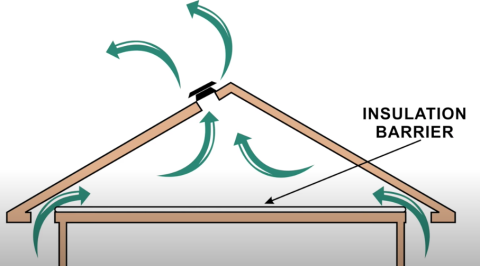
Attic Ventilation Design and Needs
Poor attic ventilation and insulation deficiencies
may have caused condensation within your attic space. The suspected source of mold in your attic is likely a result of a mixture of mold spores and excessive condensation within the attic space that have settled on organic wood material. The general rule, on the amount of total attic vent space needed, is to have at least one square foot of vent space for every 150 square feet of attic area. Ideally, half the vents should be located in the soffit at the bottom of the roof and half in gable or ridge vents near the top to allow for natural circulation of air through the attic.
Attic ventilation temperature differential
Keeping the air temperature in the attic relatively similar to the surface temperature of the wood is crucial. If there is a differential between the two, you end up reaching dew point causing excessive condensation resulting in mold growth.
How We Treat Mold in Your Crawl Space
MassMold takes a comprehensive approach to crawl space mold removal. Our thorough inspection allows us to create a plan that is tailored to your home, ensuring effective results. We’ll start by isolating the mold so that it doesn’t spread during the treatment process. Then, we’ll get started on the mold abatement process, which involves a combination of chemical applications and other procedures, to completely eliminate crawl space mold.
You can rest assured that MassMold will do a thorough job with your crawl space mold removal.