Mold Preventing
Home Sale?
Mold Damage From Past Leak?
Mold Smell in Attic, Bathroom, or Basement
CALL US TODAY!
Home Owners
Realtors
Home inspectors
Your Affordable Mold Removal Focused Company
We Identify Mold, Remove, Disinfect, and Seal
We are an owner-operated, mold-removal focused company, that is designed to efficiently and affordably service your mold problem. How? We are NOT a franchised based water/ fire restoration company that focuses on expensive demolition and insurance-based jobs. We open less than 15% of our customers’ walls or flooring. MassMold’s client base is home owners who simply need to remove mold from their homes at a reasonable price.
Not all mold is dangerous! Don’t let other mold testing companies scare you. More scenarios require mold remediation services than simply water-damage events. Other situations that demand swift action by removal and remediation experts include:
- Attic & Basement Mold Removal
- Kitchen & Bathroom Mold Removal
- leaks in plumbing pipes or appliances (dishwasher, toilet, or garbage disposal) that are not noticed or visible
- Rooms, basements, or unseen, dark areas (crawl spaces or attics) where humidity is too high and damp air is trapped for an extended period
- Flooding events where remediation does not begin within 48–72 hours
- Cracks in exterior walls that allow water to seep into the building frame
- Leaks through roofs and exterior siding
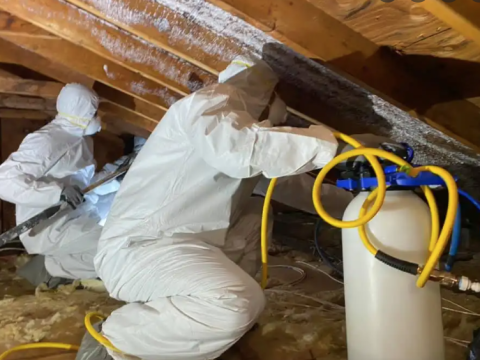

Residential Mold Removal and Remediation Services Certified 5 Year Warranty
Mold Cleaning Services Winthrop
Mold cleaning services in Winthrop mean identifying, removing, and preventing mold growth in residential properties using targeted, non-invasive methods that protect your home's structural integrity. MassMold specializes in this work across Winthrop and Greater Boston, serving homeowners who need fast, affordable solutions without unnecessary demolition.
The Problem: Hidden Moisture and Visible Growth in Winthrop Homes
Winthrop's coastal location and older residential stock create ideal conditions for mold. Salt spray accelerates moisture infiltration, and homes built before modern vapor barriers trap water in walls, attics, and basements. A homeowner on Hermon Street noticed discoloration appearing along the upper corners of her finished basement after two rainy weeks. The area smelled earthy and damp, but no obvious water pooling was visible. She called a general contractor first, who suggested opening the entire wall to "see what's in there"-a solution that would have cost thousands and left her home exposed to further damage.
This homeowner's situation is common in Winthrop. Mold often grows behind surfaces where moisture enters slowly: where roof flashing fails, where foundation walls weep water during heavy rain, or where bathroom and kitchen humidity has nowhere to escape. The visible patch on the surface is rarely the whole story.
The MassMold Approach: Testing, Mapping, and Precision Removal
MassMold began with a certified mold inspection using both visual assessment and moisture mapping. The technician used a thermal imaging camera to see temperature differences that reveal hidden moisture patterns-standard practice in professional remediation. This identified the actual source: condensation collecting along a rim joist where exterior air was leaking past failed caulk at the rim band. The visible mold was a symptom, not the problem itself.
Next came air quality testing. MassMold collected samples inside the affected area and in uncontaminated areas of the home, measuring spore counts and species. Lab analysis showed elevated levels of Aspergillus and Penicillium-common indoor molds that thrive in damp conditions but are not inherently toxic when growth is limited. Knowing the species matters: different molds require different antifungal treatments, and some respond better to encapsulation than removal.
Based on findings, MassMold proposed a three-step plan. First, seal the rim joist air leak with polyurethane foam and exterior caulk. Second, remove the contaminated drywall in the localized area-about 12 square feet. Third, treat all surfaces with a biocide, allow proper drying, and reinstall new drywall with a vapor-retarding primer. The entire process was designed to keep the wall closed: no structural opening was needed because the scope was defined by data, not guessing.
Execution: Non-Invasive Removal in Winthrop
The work took three days. MassMold set up containment using plastic sheeting and negative air pressure-standard containment protocol that prevents mold spores from traveling to other rooms during removal. The contaminated drywall section was carefully cut, bagged in sealed plastic, and disposed of as regulated waste. All framing was inspected for mold; none was found, so no additional demolition occurred.
The rim joist and rim band were scrubbed with a HEPA-filtered vacuum and a fungicidal cleaner. Once surfaces were confirmed dry (moisture readings below 16 percent, which is the threshold for mold growth), new drywall was installed with mold-resistant panels and sealed with a mold-inhibiting primer. A small dehumidifier was left running for one week to ensure the basement remained dry before the homeowner resumed normal use.
Total structural damage from opening walls: zero. Total cost avoided by avoiding unnecessary demolition: thousands of dollars.
The Result: Verified Remediation and Long-Term Prevention
Post-remediation air quality testing confirmed that spore counts had returned to normal background levels. MassMold provided a detailed remediation report with photographs, lab results, and maintenance recommendations. The homeowner received a certified 5-year warranty covering the treated areas, conditional on maintaining indoor humidity below 60 percent and ensuring gutters stay clear.
Three months later, the homeowner added weatherstripping to basement windows and sealed the exterior where a hose bib penetrated the rim band-simple preventive steps that MassMold's inspection had identified as contributing factors. The basement has remained dry and mold-free since completion. She did not need to replace her entire basement or hire a franchise company that would have quoted tens of thousands for structural remediation.
This outcome reflects MassMold's core approach: use data from testing and thermal imaging to determine the true scope of contamination, remove only what is necessary, and fix the moisture source so mold cannot return. For Winthrop homeowners with moisture concerns, this precision saves money, protects homes, and delivers peace of mind backed by a certified warranty.
Why This Matters for Winthrop Property Owners
Winthrop's climate and building stock mean mold is a practical reality, not a scare scenario. Professional mold remediation separates what is genuinely contaminated from what is simply wet or discolored. When a mold remediation company opens walls without testing, you pay for demolition; when MassMold uses inspection data to define scope, you pay for what actually needs fixing.
If you have noticed musty odors, visible discoloration, or moisture in your attic, basement, or crawl space, contact MassMold to schedule a certified inspection. We serve Winthrop homeowners, realtors managing sales, and home inspectors seeking reliable remediation partners.
Frequently Asked Questions
How can I tell if I have a mold problem in my Winthrop home?
Look for visible discoloration (usually black, green, or white patches), a musty earthy smell, or soft spots on drywall or wood. Moisture in attics, basements, or crawl spaces after rain is a warning sign. Professional mold testing is the only reliable way to confirm contamination; visual inspection alone can miss growth behind walls or in crawl spaces.
Does mold remediation require opening walls?
Not always. MassMold opens walls in less than 15 percent of cases because we use thermal imaging and moisture mapping to locate contamination precisely. If mold is surface-level or in accessible areas like attics or basements, targeted removal avoids structural demolition. The scope depends on testing results, not assumptions.
How much does mold remediation cost in Winthrop?
Cost depends on the extent of contamination, the moisture source, and whether structural removal is necessary. A small localized removal costs far less than opening walls or replacing large sections of framing. Contact MassMold for a free inspection and detailed estimate tailored to your home's specific situation.
What does a mold remediation warranty cover?
MassMold provides a certified 5-year warranty on remediated areas, covering mold regrowth in treated zones if moisture sources are controlled. The warranty assumes you maintain indoor humidity below 60 percent and address any moisture entry points identified during inspection. This gives you long-term protection backed by professional accountability.

FAST AND EFFICIENT PROCESS
MassMold is dedicated to helping you ensure that the property you or your clients want to buy or sell, is free from harmful mold that may pose a health risk if left unresolved.
Once we’ve determined the extent of the issue, we create a detailed plan of action to remove mold, clean your air, and restore your property. This full-service process is performed by highly trained technicians using state-of-the-art equipment, so you can be confident your home’s indoor air quality after our services.
We are passionate about not only identifying problems, but also recommending a course of action to resolve them quickly, so that you can rest assured that the house you are considering buying or selling meets all health and safety standards and is fit for habitation.
Why Do I have Mold in My Attic?
Improper Bath Fan to Soffit and Attic Venting
Soffit vents usually allow fresh air to flow into the attic, but they do not provide an exhaust mechanism. The best way to vent a bath fan out of the attic is through a vent in the roof itself. Also, a bath fan that vents directly into the attic is a guaranteed attic mold problem and oftentimes homeowners require professional attic mold removal services as a result.
Blocked Soffit Vents: Proper attic ventilation welcomes fresh air in and pushes moist air out. Generally speaking, attic ventilation relies on the fact that heat rises.
Humidifier Set Too High: Is your HVAC system over-humidifying your indoor air? It is best if you can maintain the relative humidity level within your home to between 40% and 60%.

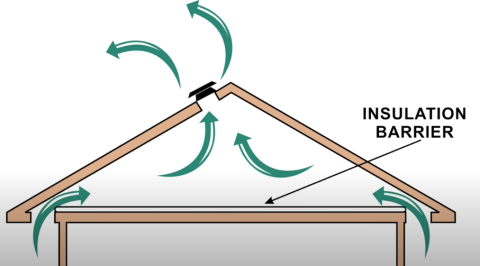
Attic Ventilation Design and Needs
Poor attic ventilation and insulation deficiencies
may have caused condensation within your attic space. The suspected source of mold in your attic is likely a result of a mixture of mold spores and excessive condensation within the attic space that have settled on organic wood material. The general rule, on the amount of total attic vent space needed, is to have at least one square foot of vent space for every 150 square feet of attic area. Ideally, half the vents should be located in the soffit at the bottom of the roof and half in gable or ridge vents near the top to allow for natural circulation of air through the attic.
Attic ventilation temperature differential
Keeping the air temperature in the attic relatively similar to the surface temperature of the wood is crucial. If there is a differential between the two, you end up reaching dew point causing excessive condensation resulting in mold growth.
How We Treat Mold in Your Crawl Space
MassMold takes a comprehensive approach to crawl space mold removal. Our thorough inspection allows us to create a plan that is tailored to your home, ensuring effective results. We’ll start by isolating the mold so that it doesn’t spread during the treatment process. Then, we’ll get started on the mold abatement process, which involves a combination of chemical applications and other procedures, to completely eliminate crawl space mold.
You can rest assured that MassMold will do a thorough job with your crawl space mold removal.